
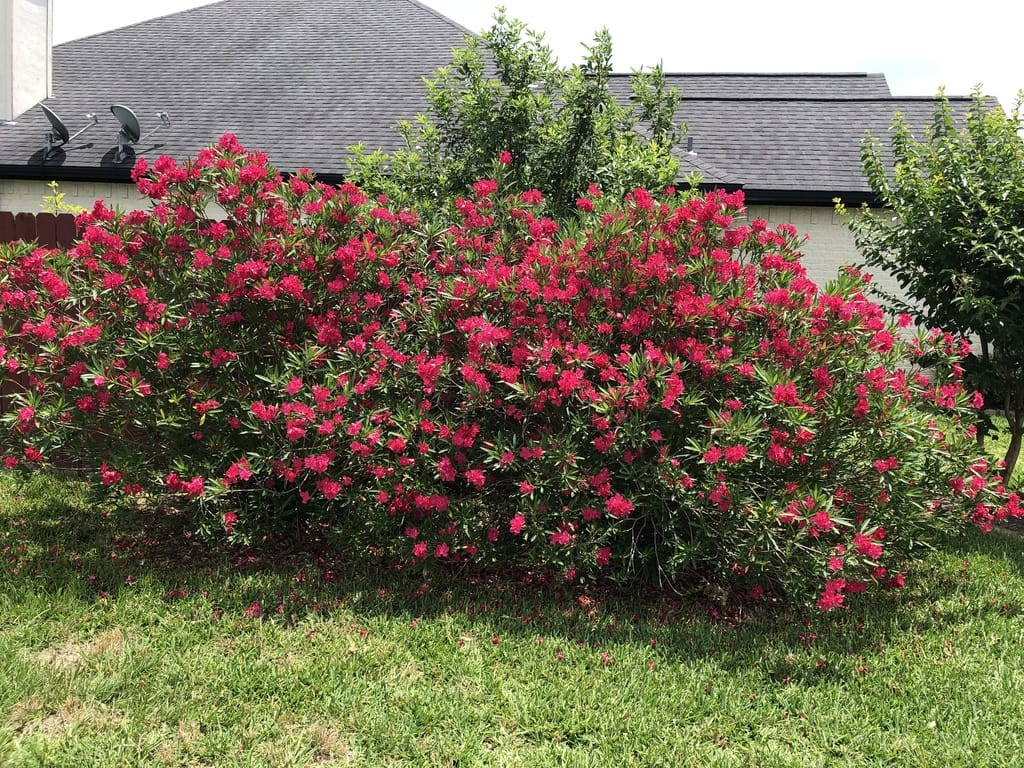
The oleander lines highways, fills median strips, and anchors residential landscapes across the Sun Belt states for one straightforward reason: almost nothing else delivers that level of flowering performance with that little water and care in hot, dry conditions. California, Arizona, Texas, and Florida gardeners have relied on it for decades. For anyone considering an oleander bush plantation, understanding both its strengths and its important safety requirements leads to a decision you can feel fully confident about.
Why Oleander Performs Where Other Shrubs Struggle
Oleander is one of the most heat and drought tolerant flowering shrubs available to American gardeners. Once established, it survives on rainfall alone in many regions, tolerates poor and alkaline soils, and blooms continuously from late spring through fall — a flowering season that most ornamental shrubs cannot match. It also handles salt spray and coastal conditions well, making it a reliable choice for seaside properties throughout the South and along the Gulf Coast.
Safety: The Non-Negotiable Part of Every Planting
All parts of the oleander bush are toxic if ingested — leaves, flowers, stems, and even smoke from burning branches. Thoughtful placement is essential. Follow these precautions without exception:
• Site the planting away from areas where young children or pets spend regular time.
• Never plant near vegetable gardens where soil, tools, or hands could transfer residue.
• Wear gloves when pruning and wash hands thoroughly before touching your face.
• Dispose of cuttings in sealed bags — never compost or burn oleander debris.
Selecting the Right Variety for Your Space
Standard oleander varieties reach 6 to 12 feet in height and spread, making them effective as privacy screens and windbreaks. Dwarf varieties like Little Red, Petite Pink, and Petite Salmon top out at 3 to 4 feet and work well in foundation plantings, containers, and smaller spaces where a full-sized shrub would overwhelm the design. Bloom color ranges from white and cream through yellow, pink, salmon, and deep red, giving significant flexibility in palette planning. In zone 7b, planting against a south-facing wall with good heat reflection extends the growing season and improves cold survival for borderline-hardy varieties. Container growing is the practical solution for gardeners in zone 7 and colder who want to enjoy the plant through warm months and bring it safely indoors before the first frost arrives each year.
Care Through the Growing Season
Established oleander bushes are among the lowest-maintenance shrubs you can grow. Irrigation is rarely needed once roots are settled unless rainfall is absent for several weeks. Feed lightly in spring with a balanced fertilizer to support the season's flowering. Deadheading spent blooms is not necessary for continued flowering, though it keeps the plant looking tidy in more formal settings. Light pruning after the main flush of bloom shapes growth and encourages a second wave of flowers.
Common Questions Gardeners Ask
Can oleander grow in containers? It adapts well to container culture and can be kept to a manageable size with occasional root pruning and regular trimming. A container of 20 gallons or more provides enough root space for several seasons before repotting is needed. Container-grown plants are also easier to overwinter indoors in climates that receive hard freezes, making oleander accessible to gardeners well outside its standard hardiness range. Standard oleander varieties reach 6 to 12 feet at maturity, making them effective as privacy screens and windbreaks along property lines. Dwarf varieties top out at 3 to 4 feet and work well in foundation plantings and containers, giving gardeners with limited space the same months-long flower display in a far more manageable footprint. Gardeners who follow the placement and handling guidelines consistently find that oleander is no more hazardous to maintain than many other common landscape plants, and its flowering performance through long hot summers is genuinely difficult to match.
Final Thoughts
The oleander bush offers a combination of flowering performance, drought tolerance, and visual impact that very few landscape shrubs can match. Respect its toxicity, site it thoughtfully, and give it the full sun it needs. When you want similarly bold seasonal color from plants with a different profile, exploring other flowering bushes alongside your oleander gives you a varied, layered landscape that delivers color through every blooming month of the year.