
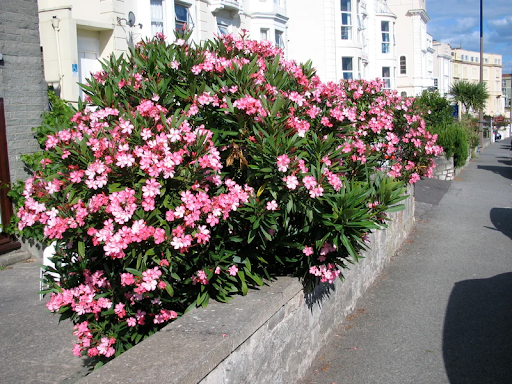
The oleander bush (Nerium oleander) is a versatile, evergreen shrub that has become a prominent plant in residential and commercial landscapes, especially in warm climates. Known for its dense foliage, vibrant blooms, and adaptability, this oleander bush serves both aesthetic and functional roles when used thoughtfully in garden design. While it’s prized for its beauty and utility, gardeners should be aware of its toxic nature and handle it with care.
Why Oleander Bush is Popular in Landscaping
Oleander is native to Mediterranean and subtropical regions and thrives in hot sun, well‑draining soil, and minimal water once established. Its appeal in landscaping comes from a combination of ornamental beauty and practical characteristics. Broad, leathery leaves remain green year‑round, while large, showy flowers bloom in a range of colors, including pink, red, white, and yellow, from late spring through fall. This extended flowering period brings long‑lasting visual impact to outdoor spaces.
This shrub also tolerates drought, heat, coastal conditions, and poor soil, making it a resilient choice for landscapes where more delicate plants might struggle. The strength of its growth habit contributes to its widespread use as a hedge and landscape accent.
Hedges and Privacy Screens
One of the most effective uses of the oleander bush in landscaping is creating hedges and privacy screens. When planted in a row with adequate spacing, oleanders grow into a dense, natural barrier that can block views, define property lines, or provide secluded outdoor space without the need for artificial fencing. Their evergreen foliage ensures year‑round coverage, and the addition of colorful flowers makes these living walls more attractive than traditional privacy fences.
To achieve the best results for privacy screening, it’s recommended to plant oleanders about 4 to 12 feet apart, depending on the mature size of the cultivar. As they grow, the branches will fill in, creating a thick, continuous screen of leaves and blooms. Pruning the plants periodically helps maintain a uniform height and shape, allowing a fuller visual barrier that also enhances air circulation.
Accenting Garden Borders and Frameworks
Beyond hedges, the Oleander bush serves as a striking structural element in landscaping. It can frame walkways, patios, and entryways, creating defined pathways or garden rooms. Planted along borders or driveways, oleanders add depth and visual interest, while their upright, bushy growth provides a lush backdrop for smaller plants. Even a single oleander can act as a dramatic focal point, layering greenery and contrasting beautifully with perennials or ornamental grasses.
Windbreaks and Functional Barriers
Oleanders aren’t just used for visual appeal; they can also serve as functional elements in outdoor spaces. Rows of dense oleander plants act as windbreaks, offering protection for more delicate plants or outdoor living areas. In coastal regions or open yards exposed to strong winds, this natural wind barrier can improve comfort and reduce stress on other parts of the landscape.
Similarly, the dense foliage can help buffer noise from busy streets or neighboring properties, offering a quieter, more serene garden environment. This benefit makes oleander a valuable consideration for urban or suburban landscapes where privacy and sound reduction are priorities.
Container Planting and Smaller Spaces
While many gardeners use oleanders for full hedges or large privacy walls, smaller cultivars of the oleander bush are available that suit container planting or tighter urban spaces. Dwarf and semi‑dwarf varieties stay compact while still providing color and lush foliage, making them ideal for patios, balconies, or courtyard gardens. Potted oleanders can be easily moved or adjusted to suit changes in the landscape design or seasonal needs.
A Safety Note on Toxicity
It is essential to note that all parts of the oleander plant are highly toxic if ingested, with cardiac glycosides that pose serious health risks to humans and animals. Because of this, oleanders should be planted with caution in environments where children or pets may access plant material. When handling, pruning, or planting, protective gloves and clothing are recommended.
Conclusion
The oleander bush is a compelling choice for homeowners and landscapers seeking a hardy, visually striking plant that delivers both beauty and utility. From privacy screens and windbreaks to bold accent plantings and container displays, it offers flexibility across many outdoor design scenarios. While its toxic nature requires careful placement and handling, its evergreen foliage, vibrant blooms, and drought tolerance make it a standout option in landscapes. When compared with other flowering shrubs used in gardens and outdoor privacy plantings, oleander’s combination of color, structure, and performance ensures it remains a top selection for sunny, warm‑climate landscapes.